01
Can my money last?
See how your plan holds up across good markets, ordinary markets, and difficult retirement sequences.

Markets do not move in a straight line, taxes matter, and retirement lasts for decades. RetireNerd lets you test your own numbers across thousands of possible market paths and see how the pieces work together.
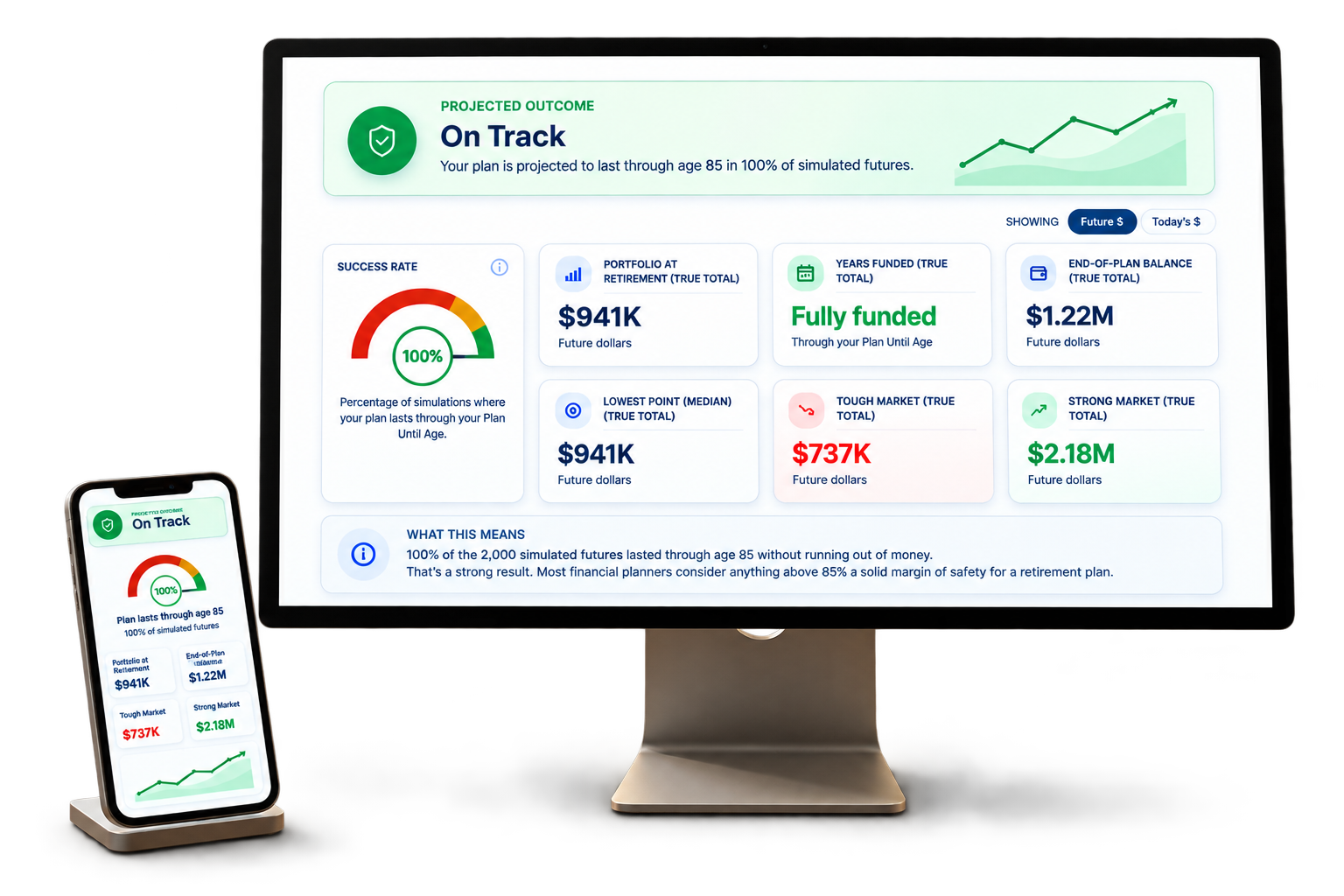
When you change your retirement age, savings, investments, spending, Social Security timing, or Roth conversion plan, something else usually changes too. The Retirement Planner & Modeler helps you see those tradeoffs together.
See how your plan holds up across good markets, ordinary markets, and difficult retirement sequences.
Test a spending target instead of guessing whether a rule of thumb fits your situation.
Move your retirement date and see how fewer working years and more withdrawal years change the picture.
Compare scenarios and find which decisions actually move the needle instead of changing things blindly.
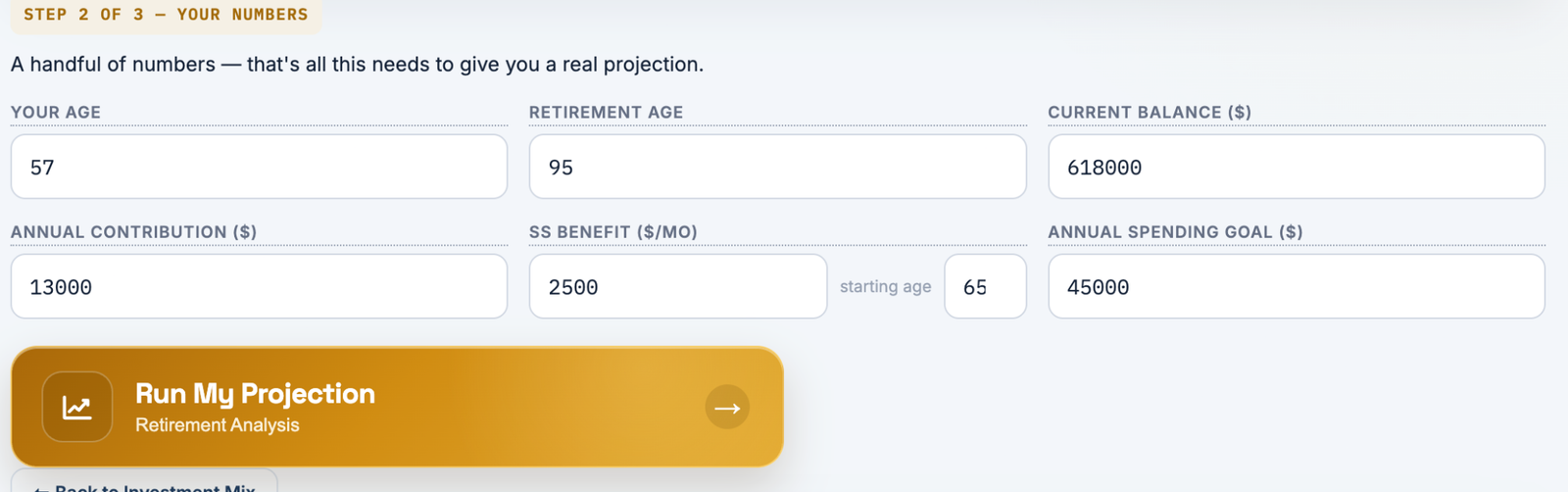
Quick Start asks for the handful of numbers that matter most: age, retirement date, savings, contributions, Social Security, spending, and a simple investment mix.
Give your current fund lineup, allocation and tax treatment a name. You can switch between saved portfolios instantly without running a projection first.
Keep a current portfolio, a more conservative option or another allocation you want to compare.
Load any saved portfolio into the model without entering every fund and percentage again.
Select two or more saved portfolios and the model combines matching tax treatments and routes each account type to the right balance.
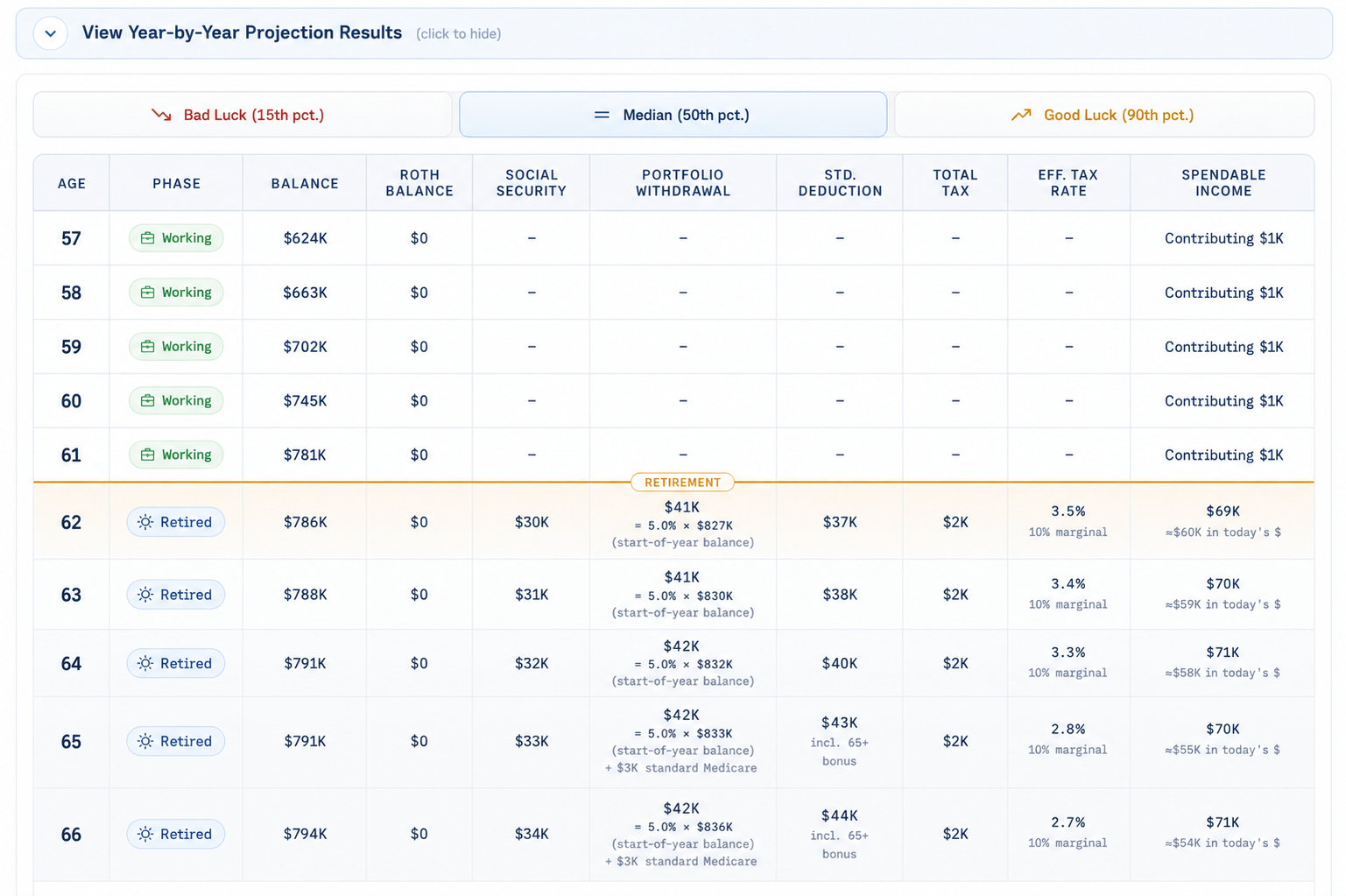
A retirement result should not be a mysterious percentage. Follow the plan through time and see balances, Social Security, portfolio withdrawals, taxes, and spendable income.
Compare the cost of leaving work earlier against the value of more time.
Use the benefit amount for the age you actually expect to claim.
Test the lifestyle you want and see how much flexibility the plan has.
Explore conversion timing alongside future withdrawals and taxes.
Model your real funds or a simple allocation and compare the tradeoff.
Stress-test the years when withdrawals and market losses can collide.
You should be able to look at a result and understand why it changed. RetireNerd is designed to make the moving parts visible instead of hiding everything behind one score.
It is educational planning software—not a promise, prediction, or replacement for professional advice. The purpose is to help you ask better questions and make more informed decisions.
Start simple. Add detail when you are ready. Change the assumptions as many times as you want.
RetireNerd is an educational planning tool and does not provide individualized financial, investment, tax, legal, or healthcare advice. Results are estimates based on the information and assumptions entered.
Educational purposes only — read the Financial & Educational Disclaimer