
Retirement Transitions & Life After Work — Part 5 of 10
This guide explains how to rebuild the repeated contact, shared activity and follow-through that allow adult friendships to grow after leaving work.
Retirement creates freedom, but it can also remove one of the most reliable sources of everyday connection: work. Even if you did not socialize with coworkers outside the office, work supplied familiar faces, shared problems, casual conversations and reasons to see the same people again.
When that structure disappears, friendship may require more intention. That can feel awkward at first. It does not mean you have become less social or that retirement is going badly. It means the setting that once produced regular contact has changed.
The goal is not to collect as many friends as possible. It is to build a social life that feels comfortable, dependable and meaningful to you.
The short answer
The most reliable way to make friends after retirement is to join a recurring activity that you genuinely enjoy, attend often enough to become familiar, and make small invitations to people you would like to know better.
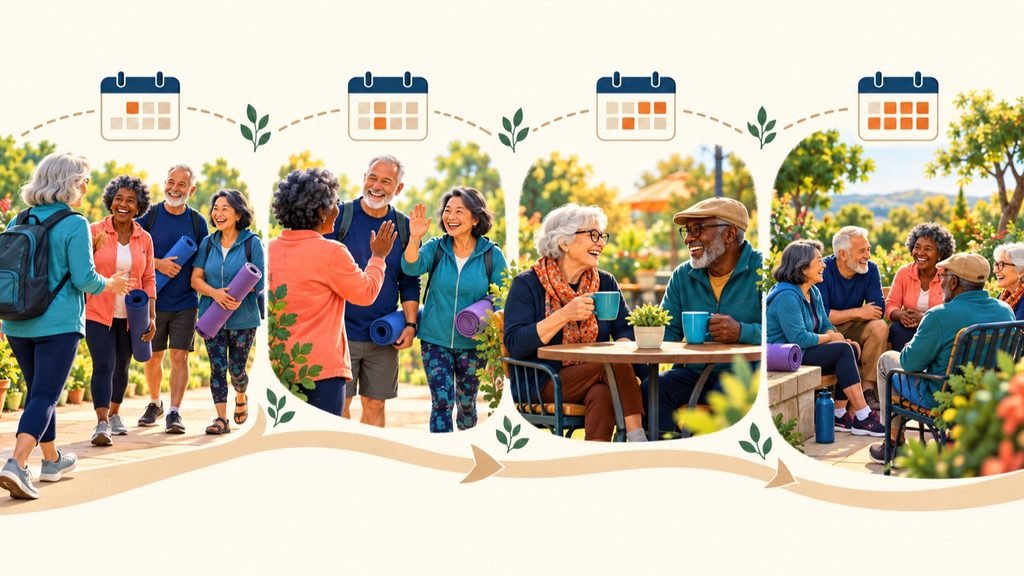
One-time events can be pleasant, but friendships usually need repetition. A weekly walking group, class, volunteer shift, choir, garden club or regular coffee hour gives people time to move from strangers to familiar faces, then from familiar faces to friends.
Use this simple pattern:
- Choose one activity that meets regularly.
- Attend at least four times before deciding it is not for you.
- Learn two names during each visit.
- Ask one person a follow-up question the next time you meet.
- Offer one small, specific invitation.
- Follow up instead of waiting for the other person to do it.
Why friendship can feel different after leaving work
Workplace relationships benefited from what friendship researchers often describe in ordinary terms as proximity, repetition and shared experience. You saw the same people, had something to discuss and accumulated small moments over time.
Retirement can remove all three at once. In addition, friends may retire at different times, relocate, care for relatives, develop health limitations or prefer different schedules. Couples can also discover that they have very different social needs after one or both partners stop working.
There is another adjustment: many adults have not needed to make new friends deliberately for decades. Starting a conversation or suggesting coffee can suddenly feel like dating. The awkwardness is normal because the skill has not been used recently—not because you are incapable of connection.
Being alone and feeling lonely are not the same
Some retirees enjoy substantial time alone and do not feel lonely. Others can feel lonely while living with a spouse or participating in several activities. Social isolation refers to having few contacts or little support; loneliness is the distressing feeling that the connection you have does not match the connection you want.
That distinction matters. A packed calendar will not necessarily solve loneliness if the interactions remain superficial. Conversely, one or two dependable relationships may be enough for someone who prefers a quieter life.
The National Institute on Aging notes that retirement, loss, mobility problems, hearing changes and lack of transportation can increase the risk of isolation. The CDC also reports that social isolation and loneliness are associated with physical and mental health risks. Social connection is part of well-being, but it is not a competition or a required personality type.
Start with the kind of connection you actually want
Before signing up for every available activity, consider what is missing.
Do you want:
- Someone to call when you need to talk?
- A couple or small group for dinner?
- Companions for walking, travel or hobbies?
- More contact with neighbors?
- Friends who share your culture, faith or life experience?
- Intellectual conversation?
- A place where people expect you and notice when you are absent?
- Opportunities to contribute rather than simply socialize?
Different settings produce different kinds of relationships. A lecture may provide stimulation but little conversation. A weekly volunteer team may build stronger bonds because people cooperate toward a shared purpose. A large social club can offer variety, while a four-person walking group may provide greater intimacy.
Choose settings that match the type of connection you want.
Where retirees can meet people naturally
Recurring classes
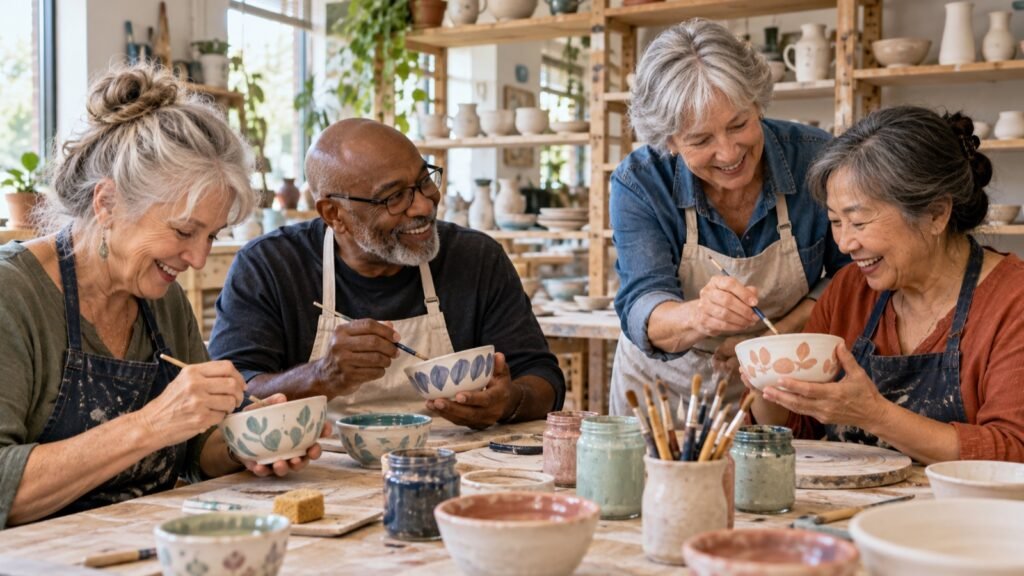
Community colleges, libraries, parks departments, museums and adult-education programs offer classes in languages, history, technology, fitness, music and art. The subject provides an immediate conversation topic, and repeated meetings make familiarity easier.
Choose a class with participation rather than a lecture-only format when friendship is a primary goal.
Volunteering with a regular team
Volunteering works best socially when you serve with the same people on a predictable schedule. Food banks, animal shelters, museums, schools, hospitals, parks and community organizations may need recurring help.
Ask whether volunteers work together or mostly complete tasks alone. Both types of work can be valuable, but the first is better for meeting people.
Movement and outdoor groups
Walking clubs, pickleball, water exercise, cycling, birding and community gardening combine activity with easy conversation. Talking side by side can feel less pressured than sitting across from a stranger.
Look for a group that matches your pace. The right atmosphere matters more than choosing the trendiest activity.
Faith and cultural communities
Congregations, cultural associations and neighborhood organizations often provide recurring gatherings, service projects and smaller groups. Existing shared values can help conversations move beyond small talk.
Libraries and community centers
Book groups, film discussions, technology help sessions, game afternoons and local-history programs often cost little or nothing. Staff members may also know which gatherings are friendly to newcomers.
Part-time work or consulting
Some retirees miss teamwork more than employment itself. A limited work schedule, seasonal position, mentoring role or consulting project can restore regular interaction without recreating a full-time career.
Existing acquaintances
Not every new friend begins as a stranger. A former coworker, neighbor, cousin, gym acquaintance or person you regularly see at a café may already be halfway into your social circle.
Ask yourself: Who do I enjoy but rarely contact? A simple message can reopen the relationship.
Repetition matters more than instant chemistry
Many people attend an event once, do not immediately connect with anyone and conclude that the group is not right for them. That is sometimes true. More often, everyone is still unfamiliar.
Try attending four to six times unless the environment feels unsafe, disrespectful or clearly mismatched. Sit near the same area, arrive a few minutes early and stay briefly afterward. Familiarity makes conversation easier for everyone.
Instead of asking, “Did I make a friend today?” ask:
- Did I recognize anyone?
- Did someone recognize me?
- Did I learn a name?
- Did I have one conversation worth continuing?
- Would I be willing to return next week?
Those are signs that a friendship can develop.
How to move from acquaintance to friend
Friendships often stall because both people wait for the other to initiate. A small invitation creates the bridge.
Keep it specific and easy to decline:
- “I’m getting coffee after class next Tuesday. Would you like to join me?”
- “You mentioned that walking trail. Would you want to try it Thursday morning?”
- “A few of us are coming early next week. I can save you a seat.”
- “I enjoyed talking with you. Would you like to exchange numbers?”
- “I’m going to the library program on Saturday. Are you interested?”
A clear invitation is kinder than “We should get together sometime,” which requires another person to invent the plan.
If the person declines, do not assume rejection. Schedules, caregiving, health and family commitments can be complicated. Offer another opportunity later if the response was warm. If invitations are repeatedly declined without an alternative, invest your energy elsewhere.
Ask better questions without interviewing people
Questions help when they invite a story rather than a résumé.
Try:
- What brought you to this group?
- Have you always lived in this area?
- What have you been enjoying lately?
- How did you get interested in this?
- Is there another local group you like?
- What do you wish you had more time for before retiring?
Listen for something you can remember and ask about later. “How did your garden project turn out?” communicates more interest than starting from zero at every meeting.
Share something about yourself too. Connection requires gradual mutual disclosure, not a string of questions directed at the other person.
Reconnect with people you already know
Old relationships do not always need a dramatic explanation. Send a short message:
I was thinking about our old lunch conversations. I would enjoy catching up if you are available for coffee sometime this month.
Or:
Retirement has made me realize I miss seeing people regularly. Would you be interested in a monthly breakfast or walk?
Some relationships will restart easily. Others belonged mainly to a particular workplace or season of life. Both outcomes are normal. The invitation still gives the relationship a fair chance.
What if you are shy or introverted?
Introversion does not prevent close friendship. It may mean that large mixers, noisy restaurants and unstructured parties are poor settings for you.
Choose activities with:
- A clear purpose
- Small groups
- Predictable schedules
- Time limits
- One-on-one or side-by-side conversation
- A role you can perform, such as greeting, organizing materials or helping with registration
You do not need to become the most outgoing person in the room. Aim to become a familiar, dependable participant.
What couples should discuss
Retirement can create pressure when one partner expects the other to provide nearly all companionship. One person may want a busy calendar while the other wants more quiet.
Discuss:
- Which activities you want to share
- Which interests you want to pursue separately
- How often you each want visitors or group plans
- Whether one partner needs encouragement, transportation or introductions
- How to protect individual friendships
Separate friendships can strengthen a relationship by giving each partner interests, support and stories outside the household.
Practical barriers deserve practical solutions
Sometimes the problem is not confidence. It is transportation, hearing, mobility, money or caregiving.
Transportation
Look for library programs, senior-center transportation, volunteer driver programs, paratransit, faith-community rides or groups within walking distance. The Eldercare Locator can connect older adults and families with local agencies and community resources.
Hearing or vision changes
Choose smaller, quieter settings with good lighting. Arrive early to select a useful seat. If hearing difficulty is causing withdrawal or frustration, discuss it with a healthcare professional rather than assuming social events are no longer enjoyable.
Limited mobility
Consider seated exercise, accessible gardening, online book groups, telephone reassurance programs or volunteer roles completed from home. Digital connection is not identical to in-person contact, but it can maintain relationships and create regular interaction.
A tight budget
Libraries, parks, community centers, walking groups, faith communities and volunteering can provide recurring contact at little cost. Friendship does not require restaurants, travel or paid clubs.
Caregiving responsibilities
Look for caregiver support groups, respite programs or activities that welcome the person receiving care. A group with people who understand the same responsibilities may provide both practical knowledge and friendship.
A 30-day friendship plan
Week 1: Map your starting point
- List five people you would be comfortable contacting.
- Identify three recurring local activities.
- Choose one activity that fits your interests, schedule and transportation.
- Put the next four meetings on your calendar.
Week 2: Become familiar
- Attend the activity.
- Introduce yourself to the organizer.
- Learn two names.
- Ask one open-ended question.
- Send one message to a former coworker, neighbor or acquaintance.
Week 3: Follow up
- Return to the same activity.
- Greet someone by name.
- Continue a previous conversation.
- Suggest coffee, a walk or arriving early together.
Week 4: Create rhythm
- Schedule the next contact before the current one ends.
- Decide whether the activity deserves another month.
- Add a second recurring setting only if the first fits comfortably.
- Notice which interactions leave you energized, supported or understood.
The plan is intentionally small. Consistency is more useful than filling every day and becoming exhausted.
When the first attempts do not work
Not every group is welcoming. Not every invitation becomes a friendship. Some people already have full social circles, and some activities simply do not provide enough interaction.
Treat early attempts as information rather than a verdict about yourself. Change one variable:
- Try a smaller group.
- Choose an activity that requires cooperation.
- Attend at a different time.
- Volunteer for a role.
- Invite one person instead of waiting for a group invitation.
- Reconnect with someone from your existing network.
Friendship develops unevenly. A few quiet weeks do not mean nothing is happening.
When loneliness needs more support
Persistent loneliness, loss of interest, hopelessness, major sleep or appetite changes, or withdrawal from activities can overlap with depression, grief and other health concerns. These feelings deserve attention and are not simply something a retiree should tolerate.
Talk with a doctor or qualified mental health professional if loneliness is persistent or affecting daily life. If you or someone you know is in immediate danger or experiencing a mental-health crisis in the United States, call or text 988 for the Suicide & Crisis Lifeline.
Build a social life that fits you
Making friends after retirement rarely depends on one perfect event or a sudden burst of confidence. It grows from repeated contact, genuine curiosity, modest invitations and reliability.
Choose one place where people gather regularly. Return long enough to become known. Learn names. Remember details. Invite someone to continue the conversation. Then do it again.
Retirement removed the workplace structure that once made connection automatic. You can build a new structure—one shaped around the people, interests and pace that fit your life now.
Frequently asked questions
Is it normal to lose friends after retirement?
Yes. Some workplace relationships fade when the shared setting disappears, while moves, caregiving, health changes and different retirement schedules can affect other friendships. This does not mean every relationship was insincere. Some were connected to a particular season of life.
Where is the best place to make friends after retirement?
The best setting is usually a recurring activity you genuinely enjoy where the same people meet regularly and have opportunities to talk. Classes, volunteer teams, walking groups, community gardens and small faith or cultural groups often provide that structure.
How long does it take to make a new friend?
There is no fixed timeline. Familiarity and trust develop through repeated interaction and follow-through. Give a promising activity four to six visits, then create a small opportunity to spend time with someone outside the group.
What if everyone in a group already knows each other?
Introduce yourself to the organizer, arrive early and ask about a role or task. Speak with one person rather than trying to enter the entire group at once. If the group remains closed after several visits, try a setting that is more welcoming to newcomers.
Can online friendships help with loneliness?
Online and telephone contact can provide meaningful connection, especially when distance, caregiving or mobility limits in-person activities. For many people, the strongest approach combines digital contact with local relationships or recurring in-person interaction when possible.
Sources and further reading
- CDC: Health Effects of Social Isolation and Loneliness
- National Institute on Aging: Tips for Staying Connected
- U.S. Surgeon General: Our Epidemic of Loneliness and Isolation
- CDC: Social Connectedness for Older Adults
- Eldercare Locator
General information only: This article provides general educational information and is not medical or mental-health advice. Contact a qualified professional for help with persistent loneliness, depression or other health concerns.