

Retirement finally grants you the precious time a national park trip has always demanded. Instead of attempting to visit all 63 national parks, this guide curates a list of the 10 most visited in America, ranked by 2025 visitor numbers. This way, you can plan your trip around the parks with the best-developed roads, shuttles, lodges, and accessible viewpoints. For each park, we’ll explore what makes it worth the trip, share some genuinely fun facts, provide a practical tip tailored for older travelers, outline the entrance fees, and offer the best way to reach the park.
Your Best Friend: The Senior Pass
Before any of the parks below, one thing is worth knowing first. If you’re a U.S. citizen or permanent resident age 62 or older, the America the Beautiful Senior Pass gets you and any passengers in your vehicle into every park on this list (plus hundreds of other federal recreation sites) for a fraction of the individual entrance fees.
A Senior Annual Pass costs $20, while a Senior Lifetime Pass, valid for the rest of your life, costs $80. Considering that a single visit to one of the $35-per-vehicle parks already brings you close to the $80 cost of the lifetime pass, it becomes remarkably economical if you intend to visit more than two or three of these parks in the coming years. You can purchase it in person at any federal recreation site that charges an entrance fee or online through the U.S. Geological Survey store.
One more current detail worth mentioning, even though it won’t impact most readers here: starting in 2026, several major parks, including Yellowstone, Grand Canyon, Yosemite, and Zion, will charge a $100 surcharge to non-U.S. residents aged 16 and above. This surcharge does not affect U.S. citizens or permanent residents, including Senior Pass holders. However, it’s important to note this if you’re traveling with international family or friends.
#1. Great Smoky Mountains National Park — Tennessee & North Carolina
In 2025, the park will receive over 11,527,939 visits, which is more than double the number of visits to the next park on this list.
Entrance fee: Free — no entrance fee at all
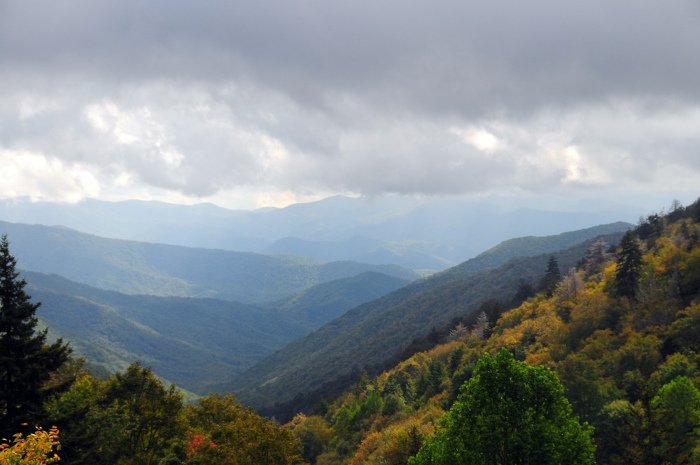
- Known as the “Salamander Capital of the World,” home to about 30 salamander species, several found nowhere else on Earth.
- About 80% of the park was clear-cut by logging companies in the early 1900s before conservation saved it; the forest has since regrown into old-growth-like hardwood cove forest.
Retirees, here’s a tip: Drive the 11-mile, one-way, paved Cades Cove Loop Road. It circles a historic valley and offers frequent sightings of deer and bears. All the views are accessible from your car without any hiking required. Go on early weekday mornings; it can be bumper-to-bumper on fall weekends.
Best way to get there: Fly into McGhee Tyson Airport (TYS) in Knoxville, TN, about 45 minutes to the Gatlinburg entrance; Asheville Regional (AVL) is a secondary option for the North Carolina side.
#2. Zion National Park — Utah
2025 visits: 4,984,525 visits in 2025
Entrance fee: $35 per vehicle (7-day pass)
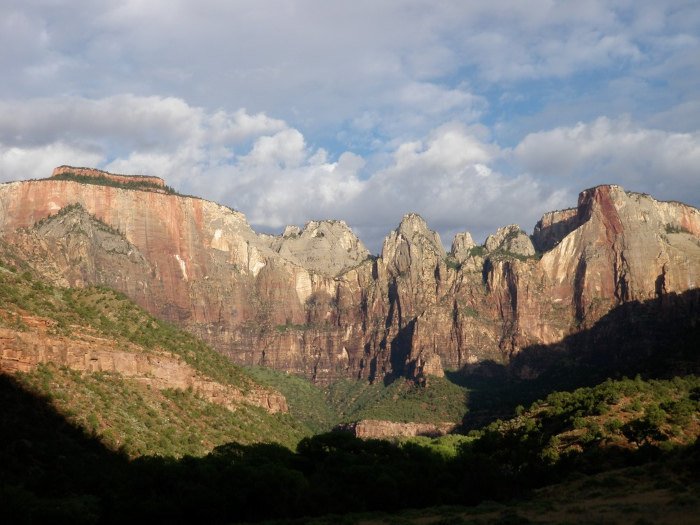
- The rock layers here record roughly 150 million years of ancient deserts, seas, and rivers from the Mesozoic era.
- Elevation inside the park ranges about 5,100 feet, creating sharply different climate zones within a short distance of each other.
- In 2014, Zion recorded the first successful wild breeding of reintroduced California condors in the park.
Retiree tip: Zion Canyon Scenic Drive is closed to private cars most of the year — the free, frequent shuttle (with accessible, low-floor buses) does all the driving between viewpoints like the Grotto and Zion Lodge. Spring and fall avoid both summer heat and shuttle crowds.
Best way to get there: Fly into Las Vegas (LAS), then drive about 2.5 hours to the park entrance — the closest major airport.
#3. Yellowstone National Park — Wyoming, Montana & Idaho
2025 visits: 4,762,988 visits in 2025
Entrance fee: $35 per vehicle (7-day pass)
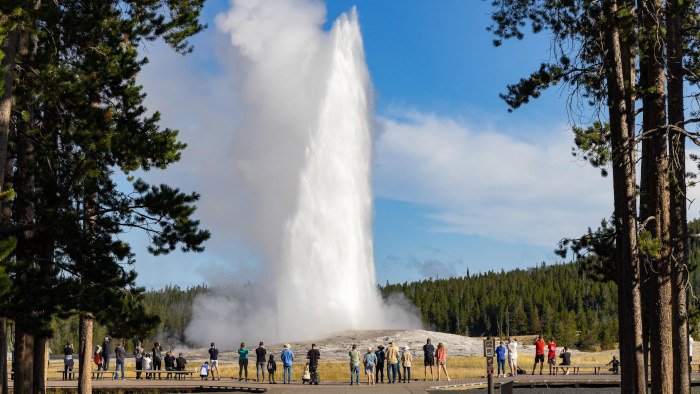
- It houses more than half of the world’s geysers and hydrothermal features, totaling over 10,000.
- Wolves were wiped out by 1926; reintroduction in the 1990s grew the population back to 118 wolves in 13 packs by 2005.
- The park’s bison herd stands as one of the only four genetically pure, free-roaming herds remaining in North America. It was rebuilt from fewer than 50 animals in 1902 and has grown to nearly 5,000 today.
Retiree tip: Stick to the flat boardwalk loops at Old Faithful/Upper Geyser Basin and West Thumb — you see the major thermal features with zero elevation gain. September brings cooler weather and thinner crowds.
Best way to get there: Fly into Bozeman Yellowstone International (BZN), about 90 minutes to the west entrance, or Jackson Hole (JAC) via the south entrance through Grand Teton.
#4. Grand Canyon National Park — Arizona
2025 visits: 4,430,653 visits in 2025
Entrance fee: $35 per vehicle (7-day pass)
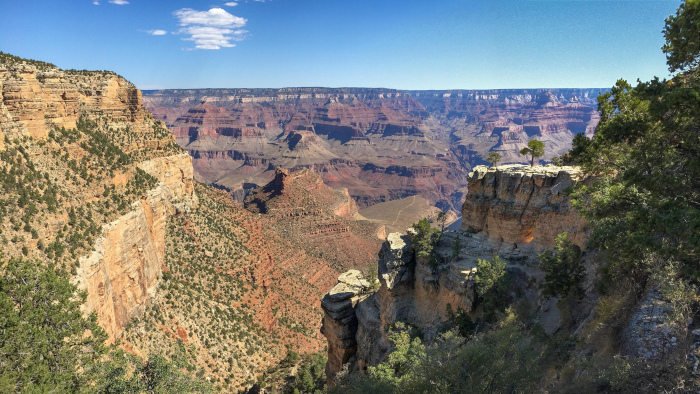
- The exposed rock layers, dating back nearly 2 billion years, are among the oldest exposed rock formations on Earth. They provide an almost continuous record of the planet’s geologic history.
- This is one of the best places in the U.S. to spot a California condor in the wild, a major recovery site for this one of the rarest birds in the world.
- The park spans five of North America’s seven life zones, roughly the ecological equivalent of traveling from Mexico to Canada in one place.
Retiree tip: The South Rim’s free shuttle (Hermits Rest Route) reaches multiple overlooks with no driving or long walks, and the paved, mostly level Rim Trail between the Visitor Center and Bright Angel Lodge gives you the classic canyon views without needing to hike below the rim.
Best way to get there: Fly into Phoenix Sky Harbor (PHX), then drive about 3.5–4 hours north to the South Rim. Las Vegas (LAS) is a similar ~4.5-hour drive.
#5. Yosemite National Park — California
2025 visits: 4,278,413 visits in 2025
Entrance fee: $35 per vehicle (7-day pass)
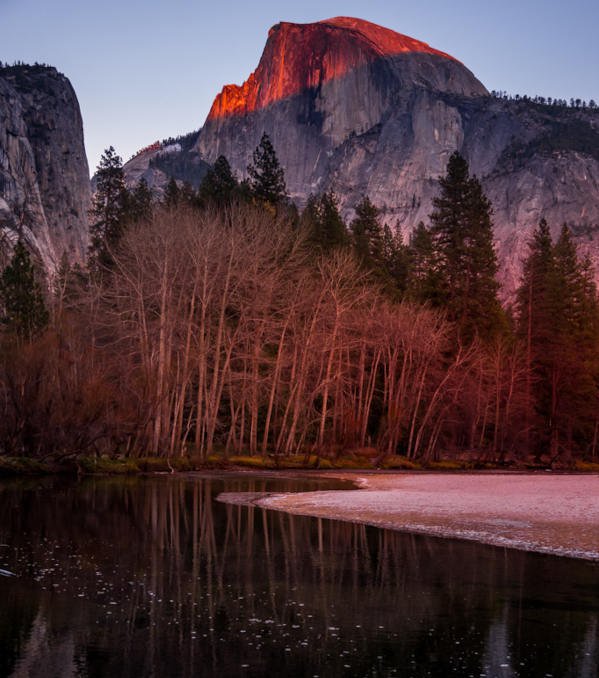
- El Capitan, one of the largest exposed granite monoliths on Earth, boasts a nearly 3,000-foot sheer face that is visible from the valley floor.
- Giant sequoia cones actually need fire-scorched soil to open and germinate; decades of fire suppression hurt natural reproduction, so the park now uses prescribed burns.
Retirees, Tunnel View and Glacier Point offer classic postcard valley vistas or a 3,200-foot bird’s-eye view, both accessible via paved, drive-up overlooks. No hiking is required. Free shuttle buses circulate Yosemite Valley, so parking headaches can be skipped entirely.
Best way to get there: Fly into Fresno Yosemite International (FAT), roughly 1.5–2.5 hours to the south entrance.
#6. Rocky Mountain National Park — Colorado
2025 visits: 4,171,431 visits in 2025
Entrance fee: $35 per vehicle (7-day pass)
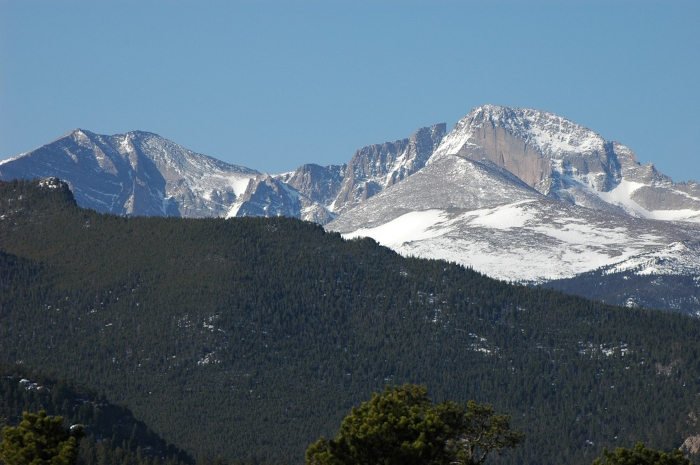
- The Continental Divide makes an unusual horseshoe bend near the Never Summer Mountains.
- Trail Ridge Road is the highest continuously paved highway in the U.S., cresting at 12,183 feet.
- Moose, eliminated from the park by the 1800s, were successfully reintroduced in 1978 and are now commonly seen on the west side.
Retiree tip: Spend a night in Estes Park (7,500 ft) to acclimate before driving Trail Ridge Road, drive it in the morning before afternoon thunderstorms build, and lean on the many roadside pullouts rather than hiking at altitude.
Best way to get there: Fly into Denver International Airport (DEN), about 1.5–2 hours to Estes Park.
#7. Acadia National Park — Maine
2025 visits: 4,079,318 visits in 2025
Entrance fee: $30 per vehicle (7-day pass)
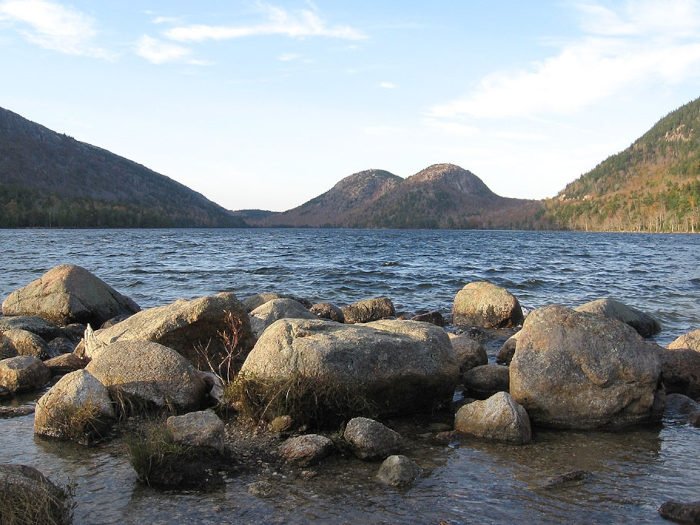
- Cadillac Mountain is the highest point on the U.S. Atlantic coast (1,530 ft), and for part of the year it’s the first place in the continental U.S. to see the sunrise.
- Nearly half the park exists thanks to Rockefeller-family philanthropy, including the 45 miles of car-free carriage roads.
Retiree tip: Drive the paved, 27-mile Park Loop Road and the paved auto road to the Cadillac Mountain summit for sweeping coastal views with zero hiking. Visit in June or September to skip the peak July–August crowds and heat.
Best way to get there: Fly into Bangor International Airport (BGR), about 1 hour to Bar Harbor; Portland (PWM) is a farther secondary option (~3 hours).
#8. Grand Teton National Park — Wyoming
2025 visits: 3,800,648 visits in 2025
Entrance fee: $35 per vehicle (7-day pass)
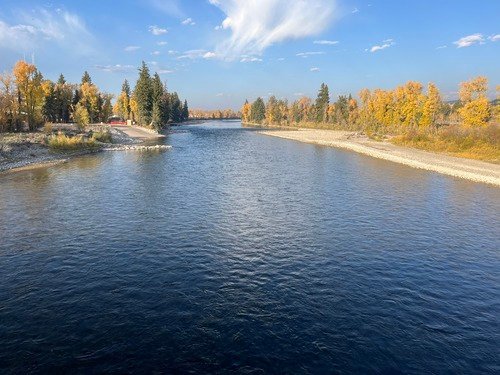
- Some Teton rock is estimated to be 2.7 billion years old, making it one of the oldest exposed rocks in any U.S. national park.
- Jackson Hole Airport is the only commercial airport located inside a U.S. national park.
- The first ascent of Grand Teton in 1898 touched off one of the most disputed controversies in American mountaineering history, over an earlier 1872 claim.
Retiree tip: At Jenny Lake, take the small shuttle boat across instead of hiking the lakeshore trail — it cuts roughly 4 miles round-trip and still gets you to Hidden Falls and Inspiration Point.
Best way to get there: Fly directly into Jackson Hole Airport (JAC), which sits inside the park.
#9. Olympic National Park — Washington
2025 visits: 3,584,187 visits in 2025
Entrance fee: $30 per vehicle (7-day pass)
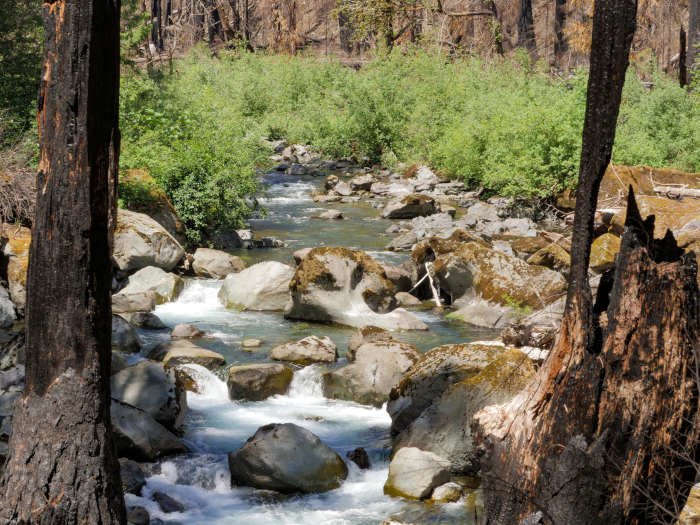
- This park uniquely combines three distinct ecosystems: glaciated peaks, a temperate rainforest, and a wild Pacific coastline.
- The Hoh Rain Forest gets 12+ feet of rain a year, among the wettest spots in the continental U.S.
- Peninsula isolation produced species found nowhere else on Earth, like the Olympic marmot.
Retirees can enjoy a leisurely visit to Hurricane Ridge. The visitor center is accessible via a paved road that leads up to an elevation of approximately 5,242 feet. Short paved walkways offer breathtaking panoramic views of the surrounding mountains, eliminating the need for strenuous hiking. Best visited May through September.
Best way to get there: Fly into Seattle-Tacoma International (SEA), then roughly 2–3 hours by car, sometimes plus a ferry, depending on which side of the park you approach.
#10. Glacier National Park — Montana
2025 visits: 3,136,557 visits in 2025
Entrance fee: $35 per vehicle (7-day pass)
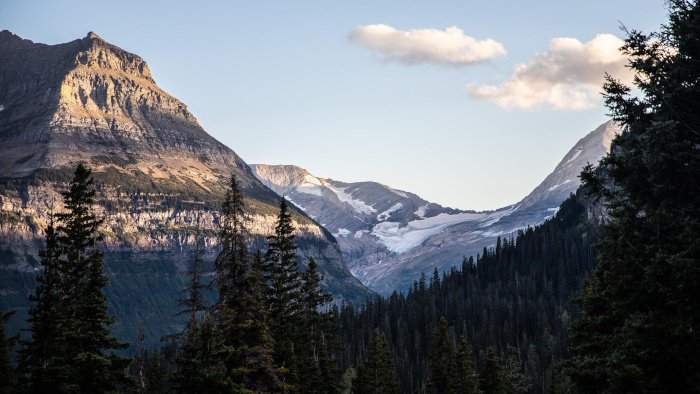
- Ancient rock here was thrust 50 miles eastward during mountain-building roughly 170 million years ago, preserving some of the finest early-life fossils on Earth.
- Of about 150 glaciers present in the mid-1800s, only 25 remained by 2010.
- Just outside the park in Browning, MT, the temperature dropped a world-record 100°F in 24 hours (44°F to −56°F) in January 1916.
As a retiree, I recommend taking advantage of the free Going-to-the-Sun Road shuttle or a historic Red Bus tour instead of driving yourself on the narrow, cliff-edge road. This way, you can eliminate the stress of driving and instead enjoy the breathtaking scenery.
Best way to get there: Fly into Glacier Park International Airport (FCA) in Kalispell, about 30 minutes from the West Glacier entrance.
General Tips for Visiting National Parks in Retirement
- Go in shoulder season when you can. Late spring and early fall generally mean smaller crowds, milder weather, and easier parking than the June–August peak — worth arranging around if your schedule is flexible.
- Book your park reservations in advance, as many popular parks now require them during peak hours in peak season. Before you go, check each park’s current entry requirements, as these rules can change annually.
- Before visiting a park, inquire about its accessibility features. Each park listed on the National Park Service (NPS) website has at least some paved, wheelchair- or walker-friendly viewpoints. The NPS website’s “Accessibility” page for each park provides specific details about these viewpoints. Additionally, visitor centers are a reliable source of information once you arrive at the park.
- Allow yourself an additional day to explore high-elevation parks. Both Rocky Mountain and Grand Teton National Parks are situated at elevations where altitude can impact individuals of all fitness levels. A slower pace on the first day is more beneficial than it may seem.
- Bring a physical map, more water than you think you need, and the pass. Cell service is unreliable or nonexistent in most of these parks, so download offline maps beforehand and avoid relying on your phone once you’re inside.
Before traveling to a national park, especially those with a timed-entry system, double-check the current details on nps.gov, including fees, entry requirements, reservation rules, and visitation rankings.
Visitor numbers shown here are the National Park Service’s official 2025 calendar-year totals, released in March 2026 — the most recent full-year data available.
A Note on the Photos in This Guide:
Every photo shown is sourced directly from the National Park Service’s own official website or digital asset library. Photos taken by NPS staff as part of their official duties are U.S. government works, which under federal law (17 U.S.C. §105) cannot be copyrighted.