Living Well With Type 2 Diabetes: How to Enjoy Food Again, Without the Worry
For many people, a type 2 diabetes diagnosis often brings to mind a specific image: a life of monotonous meals, constant restrictions, and a mental checklist of everything they’re no longer permitted to indulge in. This is one of the most prevalent fears people express about eating with type 2 diabetes, yet it’s also one of the least accurate representations of the condition.
Managing type 2 diabetes effectively doesn’t mean giving up your favorite foods. Instead, it involves gaining a deeper understanding of your body’s mechanisms and making a few small, sustainable changes. This approach is more realistic than enduring a lifetime of self-restraint and deprivation. Many individuals who establish a healthy routine tend to eat more mindfully, yet still savor their meals just as much as before.
Key takeaways
- A type 2 diabetes diagnosis does not mean giving up the foods you love; balance, portions and pairing matter more than banning foods.
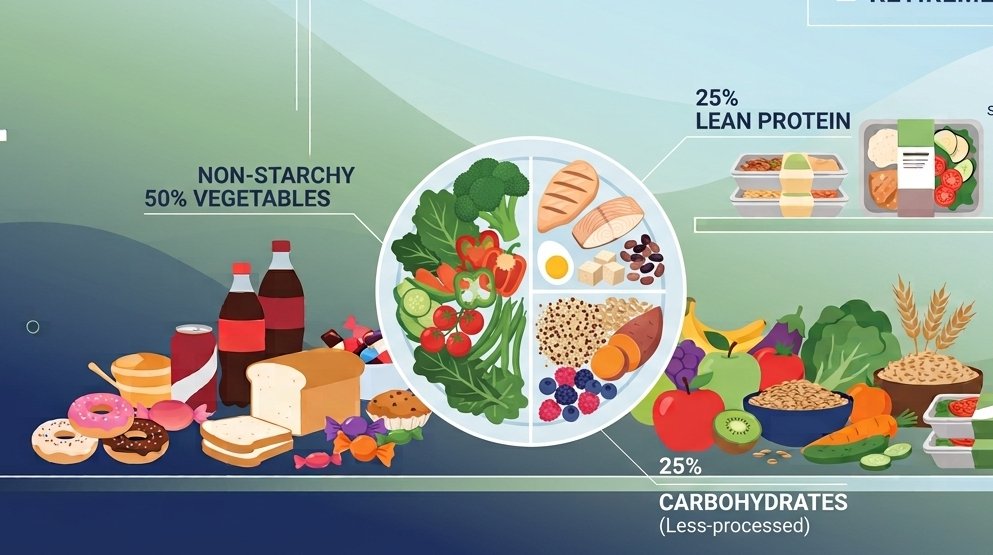
- The plate method keeps meals simple: half non-starchy vegetables, a quarter lean protein and a quarter carbohydrates.
- Pairing carbs with protein, fat or fiber slows how fast your body absorbs glucose.
- All-or-nothing rules tend to fail, and the stress they cause can raise blood sugar too.
The Myth That Makes This So Much Harder Than It Needs to Be
The most prevalent misconception is that sugar and carbohydrates are now strictly prohibited. This belief can cause more stress than the diagnosis itself, and stress is not a minor concern here. In fact, it can even raise blood sugar levels, which means fear-based eating can work against you on two fronts simultaneously.
Here’s the more practical truth: managing blood sugar through food primarily involves balance, portion control, and pairing, not complete elimination. An all-or-nothing mindset, such as “I can never have this again,” often leads to failure over time because it’s not sustainable for most people. A single slip can spiral into feeling like the entire effort has failed. A flexible and realistic approach is not a compromise; it’s the most effective strategy for long-term success.
What’s Actually Happening, in Plain English
You don’t need a biology lesson to eat well, but a little context makes the “why” behind the strategies below click into place.
When you consume carbohydrates like bread, rice, fruit, and sweets, your body breaks them down into glucose, which raises your blood sugar levels. In type 2 diabetes, your body struggles to efficiently move that glucose from your bloodstream into your cells. The crux of the problem lies not in the inherent “badness” of carbs, but in the body’s need for additional assistance in managing the glucose they produce.
Fiber, protein, and fat all slow down how quickly your body absorbs that glucose. That’s the whole secret behind most of what follows: it’s rarely about avoiding a food entirely, and much more about what you eat alongside it, and how much of it you eat at once.
It’s also important to understand that not all carbohydrates behave the same way. For instance, a cup of white rice and a cup of lentils are both considered “carbs,” but lentils contain fiber and protein that significantly slow down their impact on blood sugar levels. This is why two foods with a similar carb count on a label can feel completely different afterward. The entire package matters, not just the single number.
The Plate Method: A Simple Way to Build Any Meal
You don’t need to count anything to eat well most of the time. A simple visual guide works for the majority of meals: picture your plate divided into sections.
- Fill half of your plate with non-starchy vegetables, such as leafy greens, broccoli, peppers, green beans, and tomatoes.
- Fill a quarter with lean protein sources like chicken, fish, eggs, tofu, beans, or lean cuts of meat.
- Fill the last quarter of your plate with carbohydrates. Opt for whole grains, starchy vegetables, or fruit, preferably the less-processed version of your craving.
That’s it. No app, no scale, no math required at the dinner table. Once this becomes a habit, most meals more or less build themselves.
Pairing, Not Avoiding
If you’re planning to consume a carbohydrate-rich food item like pasta, rice, or a slice of cake, the most effective strategy is to avoid eating it on its own. Instead, pair it with protein, fat, or fiber. This combination will result in a more gradual increase in blood sugar levels compared to consuming the carbohydrates alone.
Some people also find that the order they eat matters: vegetables and protein first, carbohydrates last, in the same meal. It’s a small thing, but for many people it noticeably softens the after-meal blood sugar rise, and it costs nothing to try.
What a Day of Eating Can Actually Look Like
Abstract advice is easier to comprehend with a concrete example. This isn’t a strict meal plan to follow; it’s simply an idea of how the plate method appears in practice once it becomes a habit rather than a project.
- Breakfast might be scrambled eggs with spinach and a slice of whole-grain toast, or plain yogurt with berries and a small handful of nuts. Either one pairs protein and fiber with a modest amount of carbohydrate, and both are ready in a few minutes.
- Lunch could be a substantial salad with grilled chicken, beans, and a light vinaigrette, or last night’s dinner leftovers served on a smaller plate. The goal isn’t to create a special “A diabetic lunch is simply your regular lunch, thoughtfully prepared using the plate method.
- If you’re craving a mid-afternoon snack, consider an apple with a tablespoon of peanut butter or a few whole-grain crackers with cheese. These options pair carbohydrates with protein or fat, making them more satisfying than eating them alone.
- Dinner could be baked salmon, roasted vegetables, and a small serving of quinoa or sweet potato. Alternatively, you could have taco night, using the same ingredients but building them on a plate instead of stacking them in a tortilla, if that better suits your carbohydrate intake.
Notice that none of this resembles a restriction list. It resembles food. That’s the entire point. Once the plate method becomes automatic, most days don’t require much conscious decision-making at all.
Cravings, Holidays, and Food That Means Something to You
Food isn’t just fuel. It’s a holiday table, a recipe passed down from a parent or grandparent, a dish tied to where you grew up, a way of showing love to the people you cook for. Any approach to eating that ignores that isn’t realistic, and it isn’t sustainable either.
When a craving strikes, it’s worthwhile to pause and consider what you’re truly craving before making a decision about how to address it. Sometimes, a small portion of the actual item, consumed slowly and accompanied by other items on your plate, can completely satisfy the craving, far superior to a “diet” substitute that never quite meets the mark and leaves you yearning for more.
Holidays and special meals deserve the same grace. To fully enjoy these occasions without feeling overwhelmed or having to skip them entirely, it’s important to approach them with a plan. Eating a protein-rich meal beforehand can prevent hunger, and opting for a normal portion instead of a double one can help manage calorie intake. Additionally, taking a walk with family after the meal can provide a sense of relaxation and enjoyment. Remember, one large meal doesn’t undo weeks of consistent healthy habits. The key to managing these occasions effectively over the long run is to make peace with this reality.
Yes, You Can Still Have the Foods You Love
This is something that needs to be said clearly: occasional desserts, holiday meals, and your grandmother’s recipe don’t have to be eliminated from your life. Eating a treat as part of a balanced meal, in a reasonable portion, on a day when your overall eating has been consistent, is vastly different from a lifetime of denying yourself and then feeling like a failure when you finally indulge.
Many people find a rough “80/20” approach sustainable: most meals built around the plate method and mindful portions, with real room left for the foods that make life enjoyable. Rigid perfection isn’t the goal, and chasing it usually backfires. Consistency over time is what actually moves the needle.
Reading Labels Without Overthinking It
Nutrition labels can be overwhelming if you try to analyze every number. A simpler approach is to check the serving size first, as many packages contain more than one. Then, glance at the total carbohydrates and fiber. Fiber effectively mitigates the impact of the carbohydrates it’s packaged with, so a food with a similar carb count but more fiber is generally the gentler choice. After that, pay attention to added sugars, as they contribute glucose without much nutritional benefit.
You don’t need to memorize every number on every label. Once you get a feel for a handful of foods you eat often, the label-reading naturally fades into the background.
Grocery Shopping and Eating Out
A few practical habits make day-to-day life noticeably easier:
- Shop the perimeter of the store first. Produce, proteins, and dairy are typically located around the edges, while heavily processed foods are clustered in the center aisles. You don’t need to completely avoid the middle aisles, but it’s a good idea to build your cart from the outside in.
- Keep a few go-to meals in rotation. Having three or four reliable, plate-method-friendly meals that you can make without thinking eliminates decision fatigue on busy days, which is when old habits tend to resurface.
- At restaurants, ask for dressings and sauces on the side. It’s a small ask that gives you real control over portion without changing what you order.
- Split a starch, and don’t miss out on the joy. If you’re craving fries or a bread basket, share it instead of skipping it entirely. You can still enjoy the experience without having the full portion.
- Ask for a to-go box early. Restaurant portions are often built for two meals, not one. Boxing up half before you start eating removes the “clean plate” pressure entirely.
Blood Sugar Isn’t Only About Food
It’s important to remember that food is just one aspect of the equation. Sleep, stress, hydration, illness, and physical activity all influence blood sugar levels, sometimes even more significantly than a meal. Even a short walk, just ten minutes after eating, can significantly aid in the smoother processing of a meal’s glucose. Additionally, staying hydrated plays a crucial role in helping your kidneys manage blood sugar effectively.
This matters emotionally as much as practically: one higher reading after a meal doesn’t mean you failed, and it doesn’t erase the good habits you’ve built. It might mean you were more stressed that day, slept poorly the night before, or simply ate a bit later than usual. Treat it as information, not a verdict.
Build a Rhythm, Not a Rulebook
The individuals who establish the most comfortable routine typically aren’t those with the most stringent rules. Instead, they’re those with a consistent rhythm. This includes eating at the same times each day, rotating a small set of reliable meals, moving after eating, and giving yourself genuine permission to savor food intentionally, rather than by chance.
If you haven’t already, it’s worth asking your doctor for a referral to a registered dietitian or a certified diabetes care and education specialist. A competent dietitian won’t simply provide you with a list of prohibited foods. Instead, they’ll assist you in developing a personalized plan that incorporates the meals you genuinely enjoy, taking into account your specific health metrics, medications, and lifestyle.
A type 2 diabetes diagnosis changes how you think about food. It doesn’t have to change whether you enjoy it. Most people find that once the fear settles and the rhythm sets in, meals go back to being what they always should have been: something to look forward to.