Why Hobbies Matter in Retirement: Gardening, Creativity and Staying Engaged
Before we talk about hobbies in retirement, think about this: for years, your days probably had a schedule.
Get up. Go to work. Take care of the house. Raise a family. Run errands. Make dinner. Get ready to do it all again tomorrow.
Then retirement arrives and something wonderful happens:
You finally have more time.
But after the excitement of having no alarm clock wears off, you may discover that having more free time brings a new question.
What am I going to do with all of it?
This is where hobbies can become an important part of retirement.
A good hobby gives you more than something to do. It can get you moving, challenge your mind, introduce you to new people and give you something to look forward to.
And one of the best examples is something people have enjoyed for generations: gardening.
Key takeaways
- A good hobby gives retirement days structure, gets you moving, challenges your mind and connects you with people.
- Gardening does all of that without feeling like exercise, and you do not need a big backyard.
- Try something new, even something you are bad at, and do not spend a fortune getting started.
- Keep a hobby from turning into another job, and expect your hobbies to change as you get older.
Gardening Is More Than Growing Tomatoes
There is something satisfying about putting a tiny plant into the ground and watching it grow.
You water it. You check on it. You pull a few weeds. Then one morning you walk outside and discover a tomato that was not there yesterday.
It is a small thing, but somehow it feels like an accomplishment.
Gardening gives your day a little purpose.
Plants need attention. Flowers need watering. Vegetables need picking. There is always something small waiting for you outside.
And unlike many chores, gardening rewards you for the effort.
Gardening Keeps You Moving Without Feeling Like Exercise
Not everyone enjoys going to the gym.
Fortunately, staying active does not always require a treadmill.
Gardening naturally gets you moving.
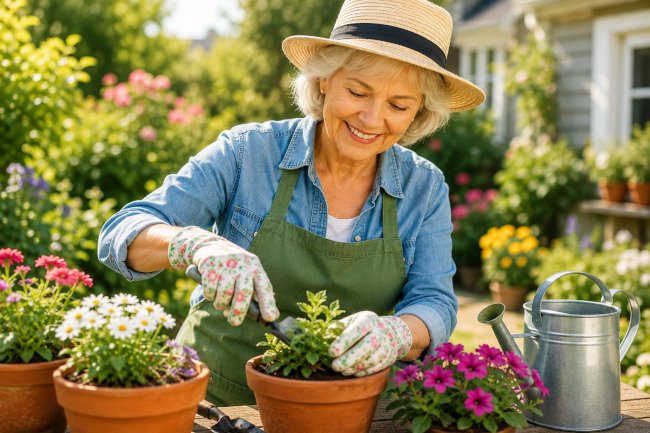
You walk. You bend. You reach. You carry a watering can. You move pots. You pull weeds. You dig in the soil.
You may spend an hour outside working in the garden and never think, “I exercised today.”
But your body certainly knows you were moving.
As we get older, regular movement becomes increasingly important. A hobby that naturally encourages you to get off the couch can be a wonderful addition to retirement.
It Gives Your Mind Something to Work On
A garden is never really finished.
There is always something to figure out.
Why aren’t the tomatoes growing?
Does this plant need more sunlight?
What should you plant next season?
Why does your neighbor somehow have peppers twice the size of yours?
Gardening involves learning, planning and problem-solving.
You might find yourself reading about soil, watching videos about pruning, learning which plants grow best in your area or figuring out how to keep squirrels from eating everything before you do.
That curiosity is good.
Retirement does not mean your brain should retire too.
You Do Not Need a Big Backyard
When people hear the word gardening, they sometimes picture a huge backyard filled with rows of vegetables.
It does not have to look like that.
You can grow herbs on a windowsill.
You can put tomatoes in containers on a patio.
You can grow flowers on a balcony.
A few pots near the front door can be enough to give you something enjoyable to care for.
If bending or kneeling is difficult, raised garden beds or taller containers can make gardening much easier.
The goal is not to become a farmer.
The goal is to enjoy yourself.
Gardening Can Be Good for Your Mood
There are days when sitting inside watching television sounds pretty good.
And sometimes it is.
But spending a little time outside can change the feel of an entire day.
Fresh air, sunlight, plants and simply being away from screens for a while can provide a welcome break.
Gardening can also be calming because it gives you something simple to focus on.
For a little while, you are not thinking about the stock market, bills, the news or what is happening in the world.
You are thinking about whether that plant needs water.
Sometimes that is exactly what we need.
A Hobby Can Give Your Week Some Structure
This is something people do not always expect about retirement.
When every day becomes Saturday, the days can start running together.
Hobbies create little anchors in your week.
Maybe Tuesday morning is gardening day.
Wednesday is your walking group.
Thursday afternoon is a woodworking class.
Friday you meet friends to play cards.
Suddenly your week has a rhythm again, but this time you get to decide what goes on the calendar.
Gardening Can Also Bring People Together
Hobbies often create conversations.
Ask someone who loves gardening about their tomatoes and you may be there for a while.
Gardeners trade plants, seeds, vegetables, advice and plenty of stories about what worked and what absolutely did not.
Community gardens can be especially enjoyable because you get the benefits of gardening along with the chance to meet people who share your interest.
And if your garden produces more zucchini than any two people could possibly eat, you suddenly have a good reason to visit the neighbors.
But Gardening Is Only One Idea
The best retirement hobby is not necessarily gardening.
It is whatever makes you interested enough to keep doing it.
Retirement can be a great time to return to something you once enjoyed, or finally try something you never had time for.
Here are a few possibilities:
- Photography
- Woodworking
- Fishing
- Painting or drawing
- Cooking
- Bird watching
- Golf
- Walking or hiking
- Playing cards
- Learning an instrument
- Volunteering
- Reading or joining a book club
- Genealogy
- Travel
- Learning a new language
- Restoring an old car
- Crafting or sewing
- Dancing
You might even discover something completely unexpected.
Try Something You Are Terrible At
Adults sometimes avoid new hobbies because we do not like being beginners.
We want to be good at things.
But there is something freeing about retirement:
You don’t have to be good at your hobby.
Your paintings do not need to hang in a gallery.
Your tomatoes do not need to win a blue ribbon.
You do not have to become a great guitar player.
You are allowed to do something simply because you enjoy doing it.
In fact, learning something completely new can be one of the most interesting parts of retirement.
Be Careful Not to Turn a Hobby Into Another Job
This happens more often than you might think.
You start woodworking for fun.
Then friends want you to build things.
Then someone suggests you sell them.
Before long you have orders, deadlines and customers.
Congratulations, you accidentally went back to work.
There is nothing wrong with making money from something you enjoy. Some retirees love turning a hobby into a small business.
Just remember that it does not have to become one.
A hobby is allowed to remain something you do simply because it makes you happy.
Do Not Spend a Fortune Getting Started
A new hobby can become surprisingly expensive.
Golf clubs, cameras, woodworking equipment, fishing gear and gardening supplies can quickly add up.
Start small.
Borrow equipment if you can. Buy used gear. Take a beginner class. Try the hobby before spending thousands of dollars on it.
If you love it after six months, then you can decide whether better equipment is worth the money.
Your retirement hobby should add enjoyment to your life, not become another reason to worry about your credit card bill.
Find Something That Gets You Out of the House
Some hobbies are wonderful because they give you a reason to go somewhere.
A photography hobby might send you looking for interesting places to photograph.
Bird watching might take you to parks you have never visited.
Gardening might lead you to a local garden club.
A cooking class might introduce you to new people.
One hobby can sometimes lead to several other experiences you never expected.
Your Hobby May Change as You Get Older
The hobby you love at 65 may not be the hobby you want at 80.
That is perfectly fine.
You may eventually prefer raised garden beds instead of kneeling on the ground. Hiking may turn into walking. Traveling across the world may turn into exploring places closer to home.
The activity can change while the purpose remains the same:
Stay curious. Stay involved. Keep doing things you enjoy.
Retirement Is Not Just About Having Enough Money
Financial planning is an important part of retirement.
But there is another question worth asking:
What are you actually retiring to?
A retirement plan can tell you whether you may have enough money.
It cannot tell you what will make Tuesday morning worth looking forward to.
That part is up to you.
Maybe it is gardening.
Maybe it is photography, fishing, woodworking, volunteering or learning something completely new.
The hobby itself matters less than what it gives you: something to learn, something to do and something to look forward to.
You worked for years to earn your free time. Now find something you genuinely enjoy doing with it.