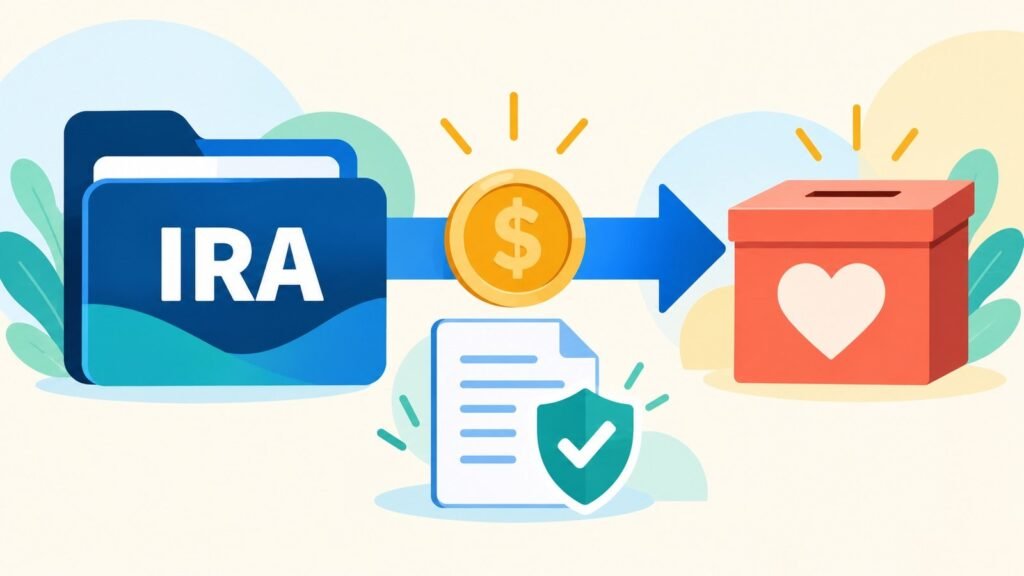
If you are 70½ or older and give to charity, a qualified charitable distribution can make the same gift cost you less. Here is how it works, who qualifies, and the steps that keep it from being taxed by mistake.
Walter is 75 and single. Every year he gives $5,000 to his food bank and his church, and every year he must take a $20,000 required minimum distribution from his IRA. Like most retirees, he takes the standard deduction, so his gifts never lowered his taxes.
Last year he asked his IRA company to send the $5,000 straight to the two charities. Same gifts, same charities. But now $5,000 of his RMD never shows up as income on his tax return.
Key takeaways
- A qualified charitable distribution (QCD) is money sent directly from your IRA to a charity, starting at age 70½.
- The gift is left out of your taxable income, so it helps even if you take the standard deduction.
- Once you reach RMD age, QCDs count toward your required minimum distribution.
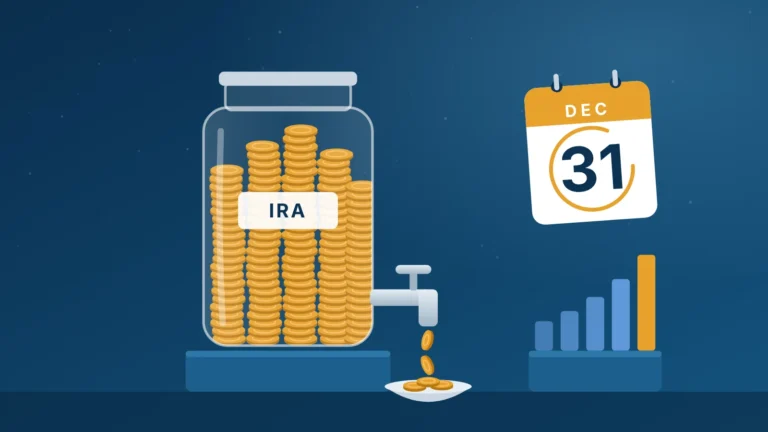
- The money must go from the IRA straight to the charity, by December 31, and you need a receipt from the charity.
In this article10 sections
What a QCD is
A QCD is a transfer from your IRA to a qualified charity that you never touch. Because the money goes directly to the charity, the IRS leaves it out of your income. You do not also get a charitable deduction for it, since it was never taxed in the first place.
The limit is $111,000 per person in 2026 and $114,000 in 2027. It rises with inflation each year. A married couple can each give up to the limit from their own IRAs.
Who can use one
- Age: you must be at least 70½ on the day the money leaves the IRA. Turning 70½ later in the year is not enough for gifts made earlier.
- Accounts: traditional IRAs and inherited IRAs (if you, the heir, are 70½). SEP and SIMPLE IRAs qualify only if your employer is not still contributing to them.
- Not workplace plans: 401(k) and 403(b) plans cannot make QCDs. You can roll the money to an IRA first, then give from the IRA.
Why it often beats writing a check
Here is Walter’s year both ways, at the 12% federal bracket:
| Check from savings | QCD from his IRA | |
|---|---|---|
| IRA income on his return | $20,000 | $15,000 |
| Charity deduction | Up to $1,000 | Not needed |
| Taxable amount from the gifts | $4,000 more | $0 |
| Extra federal tax | About $480 | $0 |
Starting in 2026, people who take the standard deduction can deduct up to $1,000 of cash gifts ($2,000 for married couples filing jointly). A QCD still goes further: it removes the whole gift from income, with no cap below the yearly limit.
Lower income can also help in ways that do not show up on the tax bracket alone:
- Medicare premiums: your income sets your Part B and Part D premiums two years later. See IRMAA: why your Medicare premium went up.
- Social Security taxes: less income can mean less of your benefit is taxed. See how Social Security benefits are taxed.
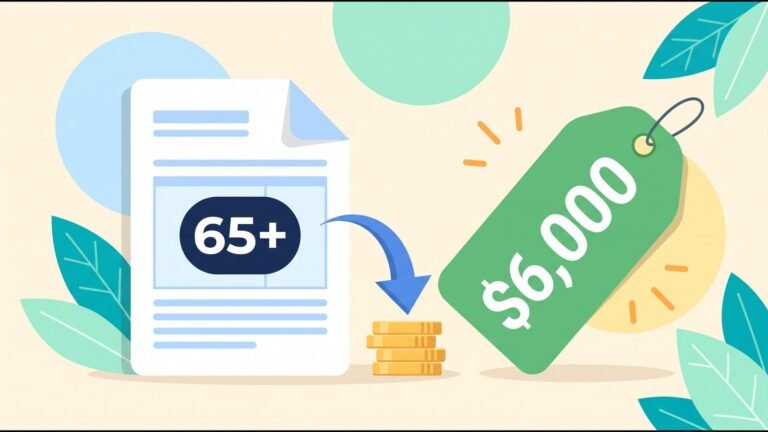
- The senior deduction: from 2025 through 2028, the extra deduction for people 65 and older shrinks once income passes $75,000 ($150,000 for joint filers). A QCD can keep you under that line. See how the senior deduction works.
How QCDs work with your RMD
Once you reach RMD age (73 if you were born from 1951 to 1959, 75 if born in 1960 or later), every dollar you give by QCD during the year counts toward that year’s RMD. If Walter gives $5,000 by QCD, he only has to take $15,000 more to meet his $20,000 RMD.
Order matters in one way: an RMD you have already taken cannot be turned into a QCD later. If you plan to give, request the QCD before you take the rest of your RMD, or at least before you take all of it. See required minimum distributions, explained and our RMD calculator.
You can start QCDs at 70½, before RMDs begin. They do not count toward an RMD then, but they still keep the gift out of your income and shrink the IRA that future RMDs come from.
Which charities qualify
Most public charities qualify: churches and other places of worship, food banks, hospitals, schools and colleges, and most groups that can accept tax-deductible gifts. Three kinds do not:
- Donor-advised funds
- Private non-operating foundations
- Supporting organizations
The gift must be one you could otherwise deduct in full. If you receive something in return, such as event tickets or a dinner, it does not qualify. Gifts to individuals, crowdfunding pages and political groups never qualify.
There is also a one-time option: you can use up to $55,000 in 2026 ($57,000 in 2027) of your QCD limit, once in your life, to fund a charitable gift annuity or a charitable remainder trust that pays you income. The rules are strict, so work with the charity or an attorney.
How to make a QCD, step by step
- Confirm you will be 70½ on the date of the gift and that the charity qualifies. The IRS Tax Exempt Organization Search at irs.gov lists qualified charities.
- Ask your IRA company for its QCD form or online request. Some offer a checkbook that writes checks straight from the IRA.
- Have the check made payable to the charity, not to you. It can be mailed to the charity or sent to you to deliver, as long as it is payable to the charity.
- Turn off tax withholding for the QCD amount.
- Get a written acknowledgment from the charity that shows the amount, the date and that you received nothing in return.
- Keep the request, the acknowledgment and a note of the date with your tax records.
Start early. A QCD only counts for the year in which the money leaves your IRA, and the deadline is December 31. A check you deliver in late December may not clear in time. See our year-end retirement checklist.
Reporting a QCD at tax time
This is where QCDs most often go wrong. Your IRA company sends a Form 1099-R that may show the full amount as a normal taxable distribution. Some now mark QCDs with a special code, but many do not.
On Form 1040, the total IRA distribution goes on line 4a. The taxable amount on line 4b leaves out the QCD, and you write “QCD” next to line 4b. Give your tax preparer the charity receipts, or check that your tax software asks about QCDs.
Common mistakes to avoid
- Taking the money first: a withdrawal deposited to your bank and then donated is a taxable distribution, even if you give it the same day.
- Giving too early: gifts made before the day you turn 70½ do not qualify, even in the year you reach that age.
- Deducting it twice: do not also list a QCD as a charitable deduction.
- Working past 70½: deductible IRA contributions made after age 70½ reduce how much of your later QCDs is tax-free.
- Missing the deadline: a QCD requested in late December can slip into January and count for the wrong year.
QCDs and your heirs
Many retirees plan to leave money to charity in their will. Giving from an IRA during your life, or naming a charity as a beneficiary of part of the IRA, is often more tax-efficient than leaving the IRA to family and other assets to charity. Family members pay income tax on an inherited IRA; charities do not. See the 10-year rule for inherited IRAs and estate planning basics.
Frequently asked questions
Can I make a QCD from a Roth IRA?
Technically yes, but it rarely makes sense. Qualified Roth withdrawals are already tax-free, so a QCD from a traditional IRA saves more.
Can I split one QCD among several charities?
Yes. You can send QCDs to as many qualified charities as you like, as long as the total for the year stays within the limit.
Do states follow the federal QCD rules?
Most states with an income tax start from federal income, so the QCD lowers state tax too, but a few states treat it differently. See which states tax retirement income.
Does a QCD lower my Medicare premium right away?
No. Medicare uses your income from two years earlier, so a QCD in 2026 can lower premiums in 2028.
Educational note: This article is general education, not tax or legal advice. QCD rules, limits and reporting can change, and your results depend on your income, state and accounts. Walter is an illustrative example, and the tax savings shown are rounded. Check IRS Publication 590-B, your IRA company and a tax professional before making a QCD.