
For decades, your employer withheld taxes from every paycheck. However, once you retire, no one does that unless you specifically request it. Here’s how to pay your taxes from Social Security, pensions, and IRA withdrawals when estimated payments make sense, along with the simple rules that help you avoid an underpayment penalty.y.
Gloria retired in March at the age of 66. She relies on Social Security benefits and withdrawals from her IRA. However, her IRA withheld the default 10% tax, while Social Security withheld nothing since she never requested it. When she filed her taxes the following spring, she was informed that she owed $3,100, in addition to a penalty for underpayment during the year. Despite this, there was nothing amiss with her financial plan. The only issue was that she had not replaced the paycheck withholding she used to receive.
Key takeaways
- After your paycheck stops, you pay taxes through withholding from your benefits and withdrawals, quarterly estimated payments, or both.
- You generally avoid a penalty if you owe less than $1,000 when you file your taxes, or if you’ve paid at least 90% of this year’s tax or 100% of last year’s.
- The IRS treats tax withheld as paid evenly through the year, so extra withholding late in the year can cover earlier quarters.
- Estimated payments for 2026 are due April 15, June 15 and September 15, 2026, and January 15, 2027.
In this article10 sections
Why retirees end up short
The tax system expects you to pay your taxes throughout the year, not all at once in April. At work, this was automatically handled. However, in retirement, each source of income has its own tax rules, and some of them withhold taxes unless you fill out a specific form.
- Social Security withholds no federal tax unless you ask, even though up to 85% of your benefits can be taxable. See how Social Security benefits are taxed.
- IRA withdrawals usually withhold 10%, which is often less than your actual rate once Social Security and other income are added in.
- Roth conversions, investment gains and dividends often have no withholding at all.
Two ways to pay: withholding or estimated payments
| Withholding | Estimated payments | |
|---|---|---|
| How it works | Tax is taken out of a benefit, pension or withdrawal before you get it | You send money to the IRS yourself, four times a year |
| Good for | Steady income, people who want it automatic | Income with no withholding, like gains or Roth conversions |
| Timing rule | Counts as paid evenly through the year | Counts on the date you pay |
| How to change it | A form for each payer | Change the amount of any payment |
Many retirees use withholding for most of their tax and add an estimated payment only when something unusual happens, such as a large capital gain or a Roth conversion.
Setting up withholding on each source
| Income | Form | If you do nothing | Your choices |
|---|---|---|---|
| Social Security | W-4V | Nothing withheld | 7%, 10%, 12% or 22% of each payment |
| Monthly pension or annuity payments | W-4P | Withheld as if you were single, with no adjustments | Set it like a paycheck, or choose no withholding |
| IRA withdrawals and other one-time payments | W-4R | 10% | Any rate from 0% to 100% |
| 401(k) payout that could be rolled over | W-4R | 20%, required | 20% or more |
You can request or modify your Social Security withholding through your my Social Security account or by sending Form W-4V to your local Social Security office. For pensions and IRAs, the payer has its own form or online setting that functions similarly to the IRS forms.
The required 20% on a 401(k) payout applies only when the money is paid to you. If the plan sends it straight to an IRA in a direct rollover, nothing is withheld. Required minimum distributions are not eligible rollover distributions, so the regular 10% default and your choices apply. See required minimum distributions explained.
The IRS Tax Withholding Estimator handles pension income and can suggest how much to withhold. The amount you choose also sets your monthly budget: withholding lowers each deposit. See how to create a retirement paycheck.
How estimated payments work
Estimated payments are for income that has no withholding, or not enough. You figure the year’s tax with the worksheet in Form 1040-ES and pay it in four parts. For the 2026 tax year, the due dates are:
| Payment | Covers income received | Due date |
|---|---|---|
| 1st | January 1 to March 31, 2026 | April 15, 2026 |
| 2nd | April 1 to May 31, 2026 | June 15, 2026 |
| 3rd | June 1 to August 31, 2026 | September 15, 2026 |
| 4th | September 1 to December 31, 2026 | January 15, 2027 |
The pattern repeats annually, and if a payment date falls on a weekend or holiday, it moves to the next business day. You can skip the January payment by filing your return by February 1 and paying all your outstanding amounts with it.
You can pay through your IRS Online Account, IRS Direct Pay from a bank account, the Electronic Federal Tax Payment System (EFTPS), or by mailing a check with the voucher from Form 1040-ES. Paying online gives you an instant record.
The rules that keep you clear of a penalty
The underpayment penalty works like interest on tax you paid late during the year. You generally avoid it if either of these is true:
- You owe less than $1,000 when you file, after your withholding and credits.
- You paid enough during the year: at least 90% of this year’s tax, or 100% of last year’s tax, whichever is smaller. If your adjusted gross income last year was over $150,000 ($75,000 if married filing separately), use 110% of last year’s tax instead of 100%.
The “last year” rule is the simplest to plan around because you already know the amount. It’s listed on your last tax return, and unexpected income this year won’t alter it. By paying that amount evenly throughout the year, you won’t incur a penalty, even if you owe a balance in April.
The year-end withholding fix
Withholding has a useful feature. The IRS treats tax withheld as if it were paid evenly on the four due dates, no matter when during the year it was actually taken out. Estimated payments, by contrast, count only on the day you send them.
So if you discover in December that you are short, you can take an IRA withdrawal with extra tax withheld. That withholding covers the earlier quarters as if you had paid on time all year. Gloria could have done this. She already planned a $12,000 IRA withdrawal in December. Raising the withholding on it from 10% to 36% would have sent an extra $3,120 to the IRS, enough to cover the $3,100 she ended up owing, and it would have counted as paid evenly through the year.
This works well with required minimum distributions, which many people take late in the year anyway. Our year-end retirement checklist includes this step.
If you just retired
Your first year of retirement is the most challenging year to manage, as it involves a mix of paycheck withholding and non-withholding periods. The IRS may waive the penalty if you retired after reaching age 62 in the tax year or the year before, provided you had a valid reason for underpaying your taxes. To request the waiver, you must fill out Form 2210 when you file your tax return. It’s advisable to avoid needing this waiver by carefully reviewing your financial situation in the fall.
Don’t forget state taxes
Most states with an income tax have their own withholding and estimated payment rules, and their own penalty. A pension or IRA payer can usually withhold state tax too, but some only do it if you ask. See which states tax retirement income.
A simple yearly routine
- In January: set withholding for the year on Social Security, pensions and planned IRA withdrawals. Use last year’s total tax as your target.
- After anything unusual: a big gain, a Roth conversion or a large withdrawal, make an estimated payment for that quarter or raise withholding.
- In October or November: add up what you have paid so far and compare it with your target.
- In December: fix any shortfall with extra withholding on an IRA withdrawal or required distribution.
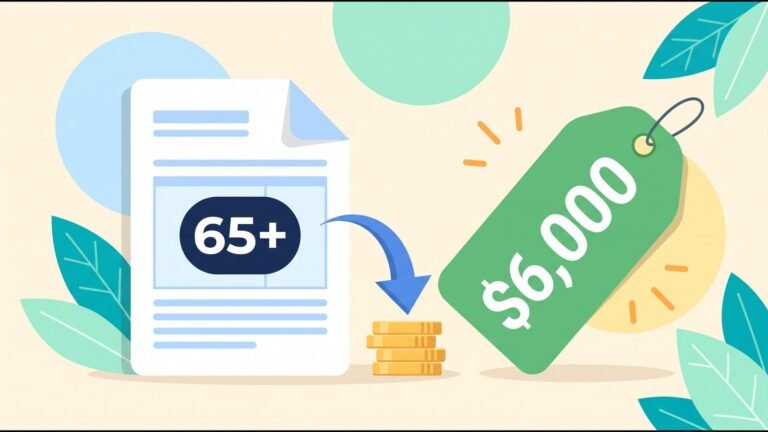
- When you file: if you got a large refund or owed a lot, adjust your forms for next year. New deductions, like the $6,000 senior deduction, can mean you need less withheld.
Frequently asked questions
Do I have to make estimated payments if I have withholding?
Withholding alone can meet one of the safe-harbor rules, so many retirees pay everything through withholding without sending an estimated payment.
Is a refund a sign I did it right?
It means you paid more than needed during the year. That avoids a penalty, but a big refund is money you could have used during the year. Aim close to your actual tax.
Can I change my Social Security withholding during the year?
Yes. You can start, change or stop it at any time online or with Form W-4V. The change applies to future payments.
I am doing a Roth conversion. Should I withhold tax from it?
Usually not. Tax withheld from a conversion never reaches the Roth, and if you are under 59½ the withheld part can also owe the 10% early withdrawal penalty. Most people pay the tax from other money with an estimated payment or extra withholding elsewhere. See how to do a Roth conversion step by step.
Educational note: This article is general education, not tax advice. Gloria is an illustrative example. Tax rules, due dates and your own results depend on your income, filing status and state. Check IRS Publication 505 or a tax professional before changing your withholding or payments.
Sources
- IRS Publication 505 (2026): Tax Withholding and Estimated Tax
- IRS Form 1040-ES (2026): Estimated Tax for Individuals
- IRS: Underpayment of Estimated Tax by Individuals Penalty
- IRS: Instructions for Form 2210
- IRS: About Form W-4P
- IRS: About Form W-4R
- IRS Tax Topic 413: Rollovers from Retirement Plans
- Social Security Administration: Request to Withhold Taxes
- IRS: Payments