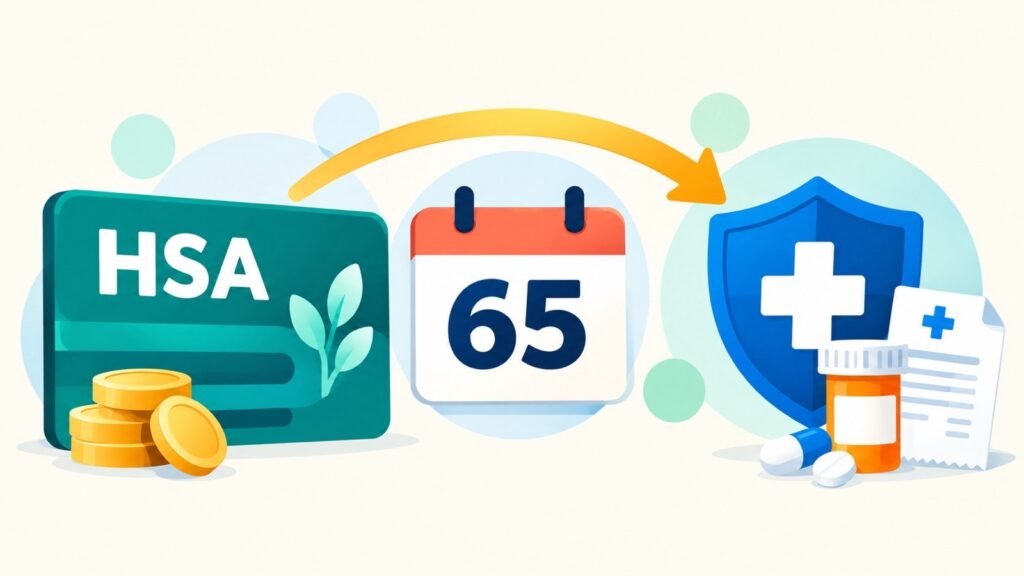
A health savings account can be the most tax-friendly money you have in retirement, if you use it the right way. Here is how HSAs work after 65, what they can pay for, and the Medicare timing rule that trips people up.
Gail is 66. Over 15 years of working, she put money into a health savings account and mostly left it alone. It is now worth about $80,000, invested in an index fund.
Last year she applied for Social Security and kept contributing to the HSA through her job, as she always had. A few months later she learned two things. Her Medicare Part A had started six months before her application, so some of those contributions were not allowed. And the $80,000 could pay her Medicare premiums, tax-free, for years.
Key takeaways
- Money taken from an HSA for qualified medical expenses is tax-free at any age, including Medicare premiums after 65.
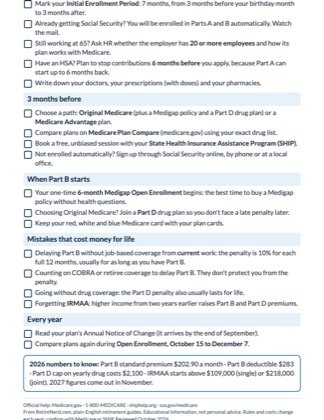
- You must stop contributing once Medicare starts, and Part A can start up to six months before you apply.
- After 65, withdrawals for non-medical spending owe income tax but no penalty, much like a traditional IRA.
- A spouse can inherit an HSA as their own, but for other heirs the whole balance becomes taxable income.
Why an HSA is so valuable in retirement
An HSA is the only account with three tax breaks. Contributions are tax-deductible (or pre-tax through payroll), the money grows without tax, and withdrawals for qualified medical expenses are tax-free.
Health care is one of the largest costs in retirement, so many people will have plenty of qualified expenses to use the money on. And unlike a flexible spending account, an HSA has no “use it or lose it” rule. The balance stays yours, year after year, even if you change jobs or retire.
Contributing: the limits and when you must stop
To contribute, you need coverage under an HSA-eligible health plan, usually a high-deductible plan, and no other disqualifying coverage. The yearly limits are:
| Year | Self-only coverage | Family coverage | Extra at 55 or older |
|---|---|---|---|
| 2026 | $4,400 | $8,750 | $1,000 |
| 2027 | $4,500 | $9,000 | $1,000 |
The rule that catches people: once you are enrolled in any part of Medicare, your contribution limit is zero. That includes Part A, which most people get free. Two details make the timing tricky:
- Part A can be backdated up to six months when you sign up after 65 (but not before the month you turned 65). Contributions made during those months count as excess contributions.
- Claiming Social Security after 65 enrolls you in Part A automatically. You cannot take Social Security and turn down Part A.
That is why many people still working past 65 stop HSA contributions six months before they apply for Medicare or Social Security. If you contributed too much, ask your HSA provider to remove the excess, plus any earnings on it, before your tax filing deadline to avoid a 6% penalty tax. See when to sign up for Medicare and, for couples with an age gap, Medicare for couples of different ages.
A younger spouse who is not on Medicare and has HSA-eligible coverage can keep contributing to their own HSA, including the family limit if their plan covers family members.
What your HSA can pay for after 65
You can spend HSA money tax-free on qualified medical expenses for yourself, your spouse and your dependents. After 65, that list grows to include most health insurance premiums:
| Tax-free from an HSA | Not tax-free from an HSA |
|---|---|
| Medicare Part B and Part D premiums, including any IRMAA surcharge | Medigap (Medicare Supplement) premiums |
| Medicare Advantage plan premiums | Over-the-counter items that are not medical |
| Part A premiums, if you pay one | Gym memberships and general wellness |
| Long-term care insurance premiums, up to an age-based yearly limit | Cosmetic procedures |
| Deductibles, copays and coinsurance | |
| Dental care, eyeglasses, hearing aids | |
| Prescription drugs |
If your Part B premium is taken out of your Social Security check, you can still reimburse yourself from the HSA for that amount. One limit: if you are not yet 65, your HSA cannot pay Medicare premiums for an older spouse. For a fuller picture of costs, see how much Medicare costs and what Medicare does not cover.
Non-medical withdrawals after 65
Before 65, money taken out for anything other than qualified medical expenses owes income tax plus a 20% penalty. After 65, the penalty goes away. You pay ordinary income tax on non-medical withdrawals, the same as a traditional IRA withdrawal.
So an HSA works at least as well as a traditional IRA for retirement spending, and better for anything medical. Just remember that taxable withdrawals add to your income for the year, which can affect how much of your Social Security is taxed and your Medicare premiums two years later. See IRMAA: why your Medicare premium went up.
The receipts strategy
You do not have to reimburse yourself in the same year you pay a medical bill. As long as the expense happened after you opened the HSA, was not paid by another source, and was not claimed as an itemized deduction, you can reimburse yourself years later.
Some people pay medical bills from their checking account while working, keep the receipts, and let the HSA grow. In retirement, they reimburse themselves for those old bills tax-free whenever they need cash. It works only with good records, so keep each receipt or statement with the date and amount.
Investing the balance and spending it down
Many HSAs pay little interest on cash but let you invest the balance in mutual funds once it passes a minimum. Money you will not need for several years can be invested like other long-term retirement savings, with a cash cushion for near-term bills. Our guide to asset location explains why tax-free accounts are a good home for long-term growth.
When you start spending, a simple order works for most retirees: use the HSA for medical costs and Medicare premiums, and use other accounts for everything else. That stretches the tax-free benefit as far as it goes.
Name the right beneficiary
What happens to an HSA at death depends on who inherits it:
- Your spouse: the account becomes your spouse’s own HSA, with the same tax benefits.
- Anyone else: the account stops being an HSA, and its full value becomes taxable income to that person in the year you die (reduced by your medical bills they pay within a year). If your estate inherits, the value goes on your final tax return.
- A charity: a qualified charity pays no income tax on what it receives.
If your heirs are not your spouse, it can make sense to spend the HSA first on your own medical costs in later life and leave Roth or other accounts to them instead. Check the beneficiary form on file; it overrides your will. See estate planning basics.
New in 2026: more people can open an HSA before Medicare
A 2025 federal law expanded HSA eligibility starting in 2026. Bronze and catastrophic plans bought through the ACA Marketplace now count as HSA-eligible, and some direct primary care arrangements no longer disqualify you. That matters if you retire before 65 and buy your own coverage. See ACA health insurance before Medicare.
A checklist before you retire
- Pick the month you will start Medicare or Social Security, and stop HSA contributions six months before if you will enroll after 65.
- Make your last contributions, including the catch-up, for the months you are still eligible.
- Gather old medical receipts from the years since you opened the HSA.
- Move money you will not need soon from cash into investments, if your HSA allows it.
- Set up reimbursements for Medicare premiums and other medical bills.
- Name a beneficiary, ideally your spouse, and review it after any big life change.
Frequently asked questions
Can I contribute to an HSA after 65?
Only if you are not enrolled in any part of Medicare and still have an HSA-eligible health plan. Once Medicare starts, including Part A backdated up to six months, your limit is zero.
Can I use my HSA to pay Medicare premiums?
Yes, once you are 65: Part B, Part D, Medicare Advantage and any Part A premium, including IRMAA surcharges. Medigap premiums are the exception.
Can I use my HSA for my spouse’s medical bills?
Yes. Qualified expenses for your spouse and dependents can be paid tax-free, even if they are not covered by your health plan.
Is there a required minimum distribution from an HSA?
No. Unlike traditional IRAs and 401(k)s, HSAs have no required minimum distributions.
Do states tax HSAs?
Most follow the federal rules, but California and New Jersey do not treat HSAs as tax-free, so contributions and earnings can be taxed at the state level.
Educational note: This article is general education, not tax, legal or medical advice. HSA rules, limits and state treatment can change, and the timing of Medicare and Social Security enrollment depends on your situation. Gail is an illustrative example. Check IRS Publication 969, your HSA provider and a tax professional before making contribution or withdrawal decisions.